
Categories
Karen On the Job

Human Engagement is Good Business

Karen - EngagementI’m concerned.

I strongly believe businesses that provide any type of service need to be continually trained on how to interact with humans.

Providing extraordinary service and excellent human engagement is electric! It’s contagious. It’s vibrant. Why are companies compromising this business principle?

You don’t want people to respond negatively to your company. Trust me. That is baaaaaaad for biz’niz.

Do you know why companies are missing the mark? They don’t think Human Engagement is a topic that requires training throughout the entire organization.

I was fortunate to participate in a customer service training program from one of the world’s finest service industries: The Disney Institute. There’s a reason they’re larger than life. If your company is bringing in billions, well then, stop reading this post right now and go eat some pizza and have a latte.

The Disney Company is determined to exceed your expectations at all times. This is good. Very good. More than good. Outstanding. A non-negotiable and the only way to be. Adopt this approach and you will see growth.

Here’s the famous question that many companies are addressing: Why is revenue down?

  1. Check out the inner-workings of your company – not the peripheral! See it as a rock thrown into water. The place it lands has the greatest impact; from there the ripple effects extend. Start where the rock lands. How extraordinary is your internal infrastructure? Does it exceed the expectations of your employees? If not, then you have a problem.
  2. The problem is not ‘out there.’ We are too quick to critique our “field workers” – our lovely comrades who are interacting with the external realms that draw in new and fresh business. They are not the problem. I repeat: they are NOT the problem. If you start with the customer’s wallet, then you will not succeed. Whether the external customers choose your company or not is not the problem. That is merely the symptom. The root problem starts in the internal infrastructure. In other words, the problem begins with the DNA. Get the DNA back on track, and you’ll get the ripple effect you desire.
  3. Train how people serve within your company. How do you enhance human engagement? Train. Re-train. Train again. Train some more. Train, equip, and train, train, train. Where do you start? Ask for help!

The good news? It’s a small fixable problem that produces a big impact. Human Engagement rocks! (no pun intended.)

– Karen Thrall

*also published on www.karenthrall.com
Categories
Awesomeness in the World Karen

Faith Can Be Painful

Karen FaithI’ve been thinking about the phrase, “Don’t lose faith”. In the Disney movie, Pocahontas sings “Just around the Riverbend”, and asks the following question: “Do you still wait for me, dream giver? Just around the river bend?”

In the New Oxford American Dictionary, faith is defined as “complete trust in someone or something.” Words affiliated with faith are: trust, belief, confidence, conviction, optimism, hopefulness and hope.

My close and dear friend, Heidi Cave, exudes the most faith of any person I know.  One thing she taught me – that I will never forget – is how painful believing can be; yet no matter how painful, one must never stop believing.

Heidi survived a devastating car accident that took the life of her friend and left her severely burned, costing her the loss of both legs from the knees down. She went through months of recovery at the Vancouver Burn Unit. She was fighting for her life on a daily basis. Her memoirs can be read here: Fancy Feet. Now an author and key note speaker, Heidi tells her story of overcoming tragedy and clinging to hope. I am so proud of who she is and the inspiration she is to countless people.

Being part of her journey, I was privy to the hardships she would face. When we’d hang out or when we’d talk on the phone, she would express her frustrations. She would vent; cry; process. She would let me see her discouragement and her vulnerability.

Believing, hoping and not losing faith was a daily battle.  It was hard work for Heidi to survive; to try and walk again. It wasn’t easy to come to terms that, in a blink of an eye, her life was dramatically changed.

But here’s the part that, to this day, impacted me. The most amazing thing would happen! She’d put her prosthetic legs back on, stand back up, and try again. She taught me that emotions are temporal. They are real, yes. But they are fleeting. Yet, she never dismissed the emotional impact of her trauma. She taught me that what we feel in the moment is not what defines us. Sure, go ahead, feel every ounce of it. And when you’re finished, remember that it’s the heart and character of what we do next that is foundational to faith.

What did Heidi do next? Every time, Heidi stood back up. With passion in her eyes, she would show us again and again that her faith never lost any ground whatsoever. Yes, there were moments of discouragement, but her fighting faith superseded all emotions.

Faith is intense determination. Faith can be painful. It is ugly sometimes. However, faith – true faith – is relentless. Faith is the conviction to keep your eyes on the mark and keep pressing forward. Faith provokes in us a tenacious spirit. Heidi is my role model in witnessing what faith truly looks like. Heidi believed she would walk again. Heidi believed that a brighter life awaited her. Heidi believed what was just around the river bend.

It is with great love and admiration and loyalty that I write about my extraordinary comrade, Heidi Cave. Thank you for showing me what “Don’t lose faith” really looks like.

– Karen Thrall

also published on www.karenthrall.com

Categories
Inside My Head Karen

What I’ve Learned From My Favorite Leaders

Karen LeadershipI found a journal entry I wrote in May, 2010 on the topic of leadership.

“One thing I really believe to be foundational…I believe the best leaders do not have an agenda for power; they have an agenda to believe in something greater than themselves. To me, for someone to lead in that way says they are a person of hope, of assurance, of purpose. They are living. Alive! They are inclusive. Because to believe in something greater than one’s self requires people. And people matter. And people’s contributions matter. And people’s voices and input and partnership and gifts..matter. Everyone matters. Everyone truly, truly matters.”

That was five years ago.

Here’s what I’ve learned from some of my favorite leaders. What I’ve admired about them, and therefore long to emulate:

  • The best leaders choose kindness first.
  • The best leaders remain a learner always.
  • The best leaders are devoted to seeing what can’t be seen.
  • The best leaders are incapable of quitting even if they really want to.
  • The best leaders will curiously listen and engage with all ages, all cultures, and all walks of life.
  • The best leaders practice the principle of the “good faith handshake” regardless if others do or not. They will do what they say.
  • The best leaders are honest and pursue character and good repute as a lifestyle.
  • The best leaders offer the gift of mutual respect and human dignity.
  • The best leaders would rather risk failing than to not try and be left always wondering.
  • The best leaders will take responsibility rather than project blame.
  • The best leaders carry an inner confidence and a quiet humility.
  • The best leaders are not afraid to express their vulnerability.
  • The best leaders display on-going gratitude because they know that some of their success is simply “luck” – being in the right place at the right time.

I closed my journal entry with this comment:

And… I’ve also observed that the best leaders can be some of the loneliest people on this planet. They’ve accepted this as part of their journey. Albert Einstein shares his vulnerability when he writes, “It is strange to be known so universally and yet to be so lonely.”

– Karen Thrall

Categories
Awesomeness in the World Karen

I Need Your Help

We have the right to be nourished. It’s a phrase that is used in one of our seminars. It’s one of five developmental stages that shapes who we become as adults.

I was on a business trip in Boston, visiting the Fluevog team. It was during an autumn month. I flew in and went straight to the store, with my carry-on and computer bag.

Pete, one of the Fluevogologists, was outside sweeping the steps.

P: “Hey Karen! Welcome back!”

K: “Thanks Pete! It’s great to be back.”

P: “Can I help you with your suitcase?”

K: “No that’s ok. I can do it.”

Wait. Pause. Hold on a minute!

Why won’t I let him help me with my suitcase?

I’m in heels, the steps are steep, the suitcase is heavy – why the bleep would I not ask for help? Because I can manage this suitcase myself. I don’t need help. I’m self-made. I’m independent. I’ve come this far on my own, why would I need help now?

Oh my.

Reload, KT. Reload.

K: “Pete, yes I would love your help. Thanks.”

Pete grabs my suitcase and we walk down the steps together.

P: “Look who just showed up!”

And with that announcement, Fluevog’s finest welcome greeted me upon entering. Ahhhh, good to be back in Boston.

In our western culture, where independence and self-made principles are imbedded into our DNA, no wonder we have lost the art of asking for help.

When’s the last time you said, “I need your help”

It’s a constant reminder in my life. It’s easy to resist help. It’s easy to talk myself out of needing help. But I don’t want to be that kind of person. I want to be human. Humans need humans.

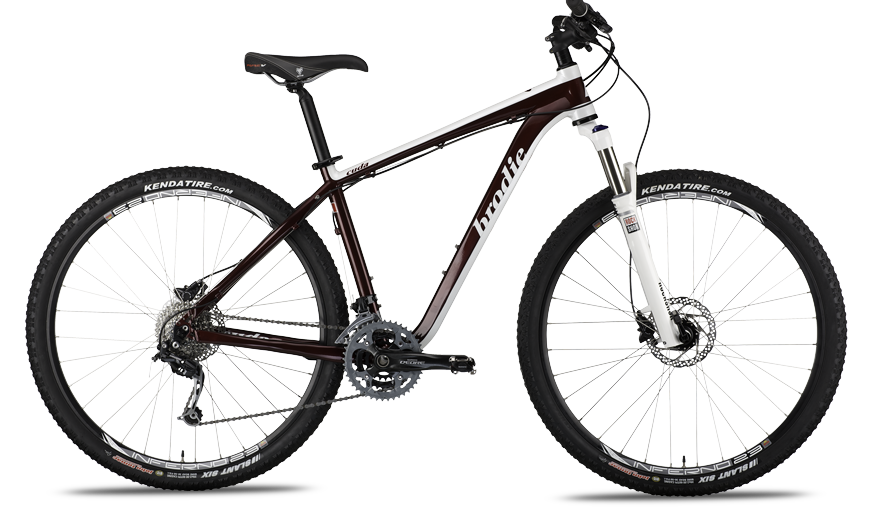
I took my bike to Performance Bicycle on Sorrento Valley Road (which was in pieces due to my road trip from Vancouver to San Diego). I own a Brodie Cuda 29er. Sweet front suspension mountain bike.

Karen bikeI walked in and said, “Hi. I need your help.”

Jason replies, “What can we do for you? We’re here to help.”

K: “My bike is in pieces. Can you reassemble it and air the tires so I can get it back in the trails?”

J: “We absolutely can do that for you.”

I could have reassembled it myself but it would have taken me far too long, in comparison to these pros that have all the gadgets and equipment and skill! And besides, they’d do a way better job than I would!

Asking for someone’s help is part of being human. It’s part of being in community. It’s part of belonging. It’s part of excellent camaraderie. It’s part of healthy relationships. From a professional point of view, it’s also good business.

Why have we stopped asking? What presuppositions have we distorted about the phrase, “I need your help.”

I have a request: I’d like you to ask for help once a day for the next fourteen days. Keep track of the responses. Let me know what happens: me[at]karenthrall.com I’d love to hear about it. If you’re the only one giving, it’s up to you to change that. How? You can start with, “I need your help.”

– Karen Thrall

 * also published on www.karenthrall.com

Categories
Career Karen

Confrontation: Deal with it now or deal with it later

One of my favorite seminars to facilitate deals with the topic of confrontation. We begin with a few general characteristics that typically surface and the participants choose which they prefer: deal with it now or deal with it later. Now the dialogue begins!

In small groups they tackle seven questions, one at a time. The first question is “What do you value most about how you deal with confrontation and conflict?” When they’ve answered the first question, they share the bullet points in the larger forum. They continue on to the second question, “What don’t you like about how the other group deals with confrontation and conflict?” We continue with this format, each question propelling us forward, until we’ve completed the exercise.

We end with a debrief and open conversations. The atmosphere is vibrant! The honesty and transparency is electric! Why? Because the safety to process how we function in unexpected turbulence is valuable.

Many times confrontation and conflict take us by surprise and our emotions are not prepared for this kind of disruption. We need these training opportunities to develop the skill of conflict resolve. I sure do!

Conflict surrounds us on a daily basis. We deal with unsettling moments every day: spilling coffee on your shirt; a traffic jam; a curt email; a rushed meeting; a crowded street; a crying child; the dog made a mess in your kitchen; tripping on a step – you get the idea! And these are the easy ones. The hard ones are when our emotions are heightened and we need to communicate. Sometimes we avoid communicating, hoping it will go away. By avoiding the confrontation, we are left battling disappointment, frustration and anger internally. That takes up a lot of energy.

Learn to communicate well in confrontation. Become an expert. The outcome? You’ll sleep better at night.

Okay, your turn! How do you deal with confrontation?

NOW:  “Let’s deal with this now.”

  • Let’s get it all out on the table and we’ll work through it.
  • If we say anything wrong, we’ll apologize.
  • Let’s not have anything between us.
  • We need to resolve this and not let time lapse.

LATER: “Let’s deal with this later.”

  • Let me think through how I’m feeling before I tell you.
  • I don’t want to say anything that I’ll regret later.
  • My mind is blank and I don’t know what to say.
  • I want to resolve, but I need to figure out what to resolve first.

Emotions play a big part in how well we can resolve conflict. Knowing what works for you to get the Best You to show up is vital to conflict resolution. If you need time to think and formulate your thoughts, take the time. If you need to get it out of your system so it doesn’t fester, get it out. The tricky part is “How?”

Are you in any type of conflict now? Is there a situation with a colleague or a loved one that has unsettled you? First, choose either the stance of Deal With It Now or Deal With It Later. Which one best describes you (normally)? Now, state your value.

“I need to talk about this right away so it doesn’t build up. I want to resolve this. Silence doesn’t work well for me. When are you free to chat?” The hard part for Now People is waiting for the right time to talk. They speak too soon, thus, their energy gets misinterpreted as aggression.

“I need time to think. My thoughts are blank. I want to resolve this, but I need to figure out what to say first. How much time can I have before we chat?” The hard part for Later People is they let too much time lapse and end up never speaking up. Their lack of energy gets misinterpreted as passive aggression.

If you are in leadership, you are trained to deal with matters quickly and efficiently.  But which group is the real you? Pick one, and then become extraordinarily dazzling at it. Become an expert conflict resolver as a Now or as a Later. Develop your skill. And watch conflict diffuse effortlessly.

– Karen Thrall

*also published on www.karenthrall.com

Categories
Inside My Head Karen

The Water Bottle

Karen WaterI went to Cebu, Philippines in my early thirties. I was invited to visit a midwifery program where my friend, Carolina, worked. It was stationed in the most impoverished part of the city. Families (mother, father, children) lived in homes the size of a large dining room table or a guestroom bathroom; made of cardboard and built on pallets.

The water was filthy and the streets had streams trickling through gutters for disposing various polutions. Children were barely clothed and rarely bathed.

The medical shelter had a breakfast and lunch program for children who were severely malnourished.

One day, I placed my water bottle on a shelf while helping with the meal program. Louis, a tiny 5 year old who was deaf and mute, would push and slap as a way of communicating. He began to push and slap me, making loud groans and squeals.

“Louis. Louis. What is it?”

He pointed to my water bottle. He wanted me to give it to him. The children were given beverages, food, snacks and water.

“Oh Louis. No, no. That’s my water bottle. There is your drink.”

He reacted strongly, continuing to make loud shrieks, pointing, jumping and flailing his arms. I tried to calm him down. He was determined to have my water bottle.

I paused. I looked at him. I looked around me.

All these malnourished children. Impoverished. They had nothing. They lived in cardboard homes. They didn’t bathe. They had physical ailments, low immune systems and are fighting for their lives.

AND I WON’T GIVE LOUIS MY WATER BOTTLE?!!

“Louis….”

I grabbed my water bottle. I bent down so our eyes could talk to each other. He can’t hear me. He can’t speak.

“Louis – you can have my water bottle. Yes, please, you can have my water bottle. I’m so sorry, Louis. Forgive me, I was thoughtless. Here you go. It’s yours. I’m very happy to give it to you.”

Louis took my water bottle and ran around the room, showing all the kids. He was so proud that he was the only child with a water bottle.

This memory is a regret of mine. Although it ended on a positive note, I don’t like how small-minded I was. I don’t like me in this story. I don’t like that I said, “no, that’s my water bottle” – to a child who has nothing and I have all the lifestyle comforts at my disposal. I hate that I said “no.” Can’t take it back. Wish I could.

May I always choose generosity over my own personal comforts.

– Karen Thrall

Categories
Inside My Head Karen

Wrestling and Restless?

Karen RestlessnessOver the last 18 months I could sense the tides turning – shifting. I knew I was about to take a new path. Yet, at the same time, I had no idea I was going to take a new path. What a paradox.

I was both wrestling and restless.

I was wrestling with who I was becoming and what was changing inside me; being stretched and uncomfortable. Significant growth opportunities were knocking at my door on a regular basis. In retrospect, I was learning how to think differently, how to strategize more effectively and communicate more clearly. I was learning how to go deeper, and choose more intently the principle of curiosity and wonder. I was awakened to see more brilliantly the everyday world surrounding me. I guess things felt heightened inside me. But that sounds so flighty. It wasn’t flighty. It was hard. It was causing me to wrestle with who I was becoming. It created a yearning and a longing in me for something. What was it? Why wouldn’t it leave me alone? What was unsettling me? There was no need to be unsettled.

This internal wrestling match created a restlessness.

I was becoming restless with my purpose in life, the location I was living, and my contribution within the business world.

I read a book in November: 30 Lessons For Living by Karl Pillemer, PHD. It provoked me. It stirred me and profoundly impacted me. It was the beginning of the tides turning. I called my friend, “I miss my coaching business. I wish I could focus only on people and leaders. That’s where my heart is. That is my purpose. That is what I long to do.” Her immediate response was, “Yes, yes, yes! Finally! Yes, Karen! Everything in me is shouting yes!”

The restlessness intensified. Unbeknownst to me, my heart knew what was going on but my mind had not caught up yet.

Until March 7, 2015.

I was having a phone conversation with another close friend. He said, “Follow your heart, Karen. It’s always done well for you.” I hung up the phone and knew immediately what that meant. Five days later I went for a long walk on the Vancouver seawall with John Fluevog (my boss, owner, designer, CEO, president, colleague, mentor, comrade… and through these last 7 years, is now also my friend.) and I shared with him what was happening within me. I told him I needed to embark on this journey. I needed to give my notice and move to San Diego. I wanted to pursue my coaching career again. I wanted to try and see if I can do it. I told him that I have a barometer I measure decisions on: When I’m 96 years old, if I don’t do this, will I regret it? Yes, I would look back with regret.

John gets it. He knows what it’s like to chase after a dream. It was actually John who was the first to say to me in 2008, “What do you want, Karen? You have to know what you want. You know what you don’t want. But you have to know what you want. What do you want…”

7 years later, here I am.

The wrestling match has silenced. The restlessness is over. I write this article, sipping my Earl Grey tea, enjoying the blue skies…of San Diego.

I took the leap. I walked off my map. I am here. I am beginning a new chapter.

Thank you, restlessness. Thank you, wrestling match. You are kind to me.

– Karen Thrall

Categories
Inside My Head Karen

Are You Defensive?

Karen DefenseHave you ever been defensive? Oh boy, I have. It’s my least favorite Karen. The aftermath of my reactiveness depletes me and I get very disappointed with myself. My listening skills are non-existent and I forget to remain curious. When I listen well and I ask questions, it’s guaranteed I won’t be defensive in the least. I don’t like me when I react. I don’t like me when my emotions are stirred up because of a conversation that isn’t going the way I had hoped.

Why do we choose to react defensively rather than respond positively? (Especially when we sincerely want to respond positively!)

Being defensive is a form of anxiety. The New Oxford American Dictionary defines anxiety as a “feeling of worry, nervousness, or unease, typically about something with an uncertain outcome.”

Let’s look at a few proposed behaviors that are associated with defensiveness.

You know you’re defensive if:

  1. You forcefully argue and debate an opinion.
  2. You need to prove your perspective is right.
  3. You’re dismissing the other person’s views.
  4. You “shush” or raise your finger/hand to enforce the person to stop talking.
  5. You think you have greater knowledge on the matter.
  6. You feel the need to stick up for yourself.
  7. You use heightened energy levels to drive your point.
  8. You’re projecting strong negative emotions.
  9. You justify your stance with “yeah, but”.

If you can identify with any of these responses, you’re experiencing anxiety. Being defensive weakens our self-confidence.

What is the single most important ingredient that will keep you from being defensive? Confidence in who you are. When we engage in conversations with confidence, our guard comes down and we don’t need to prove ourselves. We appreciate stimulating conversations, because we know they will either make us stronger or change us.

Being defensive is another way of saying “I won’t let you hurt me.” How would we respond if we entered every conversation with the mindset of, “You cannot hurt me. You can only contribute to my growth and by disagreeing with me you are helping expand my intellect.

– Karen Thrall

Categories
Inside My Head Karen

What Do You Want?

KarenWantThe question I have for you is: What do you want?

I’ve observed that it’s easier for us to list what we don’t want. But can we truly list what we want? Can we speak it forth? Can we proclaim without apology?

Do you think it’s selfish to “want?”

A dear friend of mine once said to me, “Stop being a martyr. It doesn’t look good on you.”

What does that mean?

At that time in my life, I chose to act in a state of apology for who I was, suppressed what I longed for, dismissed what I dreamed of, tempered what I desired, forbade what I wanted, etc. I let my insecurity keep me hidden. After all, to want is selfish, right?

Wrong. Selfish means a lack of consideration for others and being only concerned with your own profit. To want is a desire and a wish.

It’s up to you if you want to step into your wants selfishly or with desire. Both will get results; although the outcomes will be different.

Do you know what happens when you know what you want?

You activate motion. Whether small or great, motion is motion. A caterpillar or a cheetah. Both are moving forward. Don’t underestimate the power of movement.

I want to get from A to Z.

How will you do that?

I will start at A until I reach B; then I will go to C. Thought-filled timeliness. Or I will start at A and will leap to Z. Passionate timeliness.

Both are valuable. Both are moving you forward.

Pause and take inventory of what you want in:

  1. Love
  2. Family
  3. Friendship
  4. Purpose
  5. Career
  6. Finances
  7. Rest
  8. Joy
  9. Hobbies
  10. Quality of Life

Currently, do your desired wants have active motion?

If not, what are you going to do about it? What small or large steps can you take to activate your wants?

Stay in motion.

– Karen Thrall

Categories
Inside My Head Karen

Do I Trust You?

Karen TrustHave you ever not trusted someone? Have you had your trust broken?

Forgiveness and trust are two different journeys.

Forgiveness is necessary for your health and wellbeing. If you don’t forgive, it can jade your heart or fester bitterness. The sooner you can forgive someone, the sooner the burden of life lightens. We need to live in a lightened place. The heavier the burdens we carry, the weightier our world becomes.

I think where people get confused is in the area of trust; not forgiveness. To say I forgive you is admitting we are all flawed and we all err on imperfection. It’s normal to disappoint or hurt someone. It’s normal to get upset with one another. It’s normal to say, “Forgive me” or “I forgive you.” It’s part of life. We are disillusioned if we presuppose we can ride the wave of life without ever hurting someone or being hurt.

What about trust? That’s a different topic.

I can forgive you, but that doesn’t necessarily mean I will trust you.

When John Fluevog offered me a Director position I accepted wholeheartedly – elatedly! I also told him not to trust me. He gave me that “what did you just say?” look. I added, “I want to earn your trust, John.” It took me 18 months to earn John’s trust. (It was one of my most favorite emails to receive, with these words: “I trust you.”)

Earning someone’s trust is important to me. And someone earning my trust is equally important.

I won’t easily say I trust you. I will say I like you. I will offer up all kinds of accolades. But I will not say “I trust you” unless I really mean it. I measure it in my heart.

  • Do I trust this person is for me?
  • Do I trust this person is honest with me?
  • Do I trust this person is capable of ________?
  • Do I trust this person will do what they say?

Once I know how much I trust the individual, I can engage in the relationship accordingly.

I’m not saying it’s full distrust, but it might be a lack of trust in a specific area. If I trust you 25%, that’s important information for me to know beforehand. If I trust you 100%, then I will pour every ounce of my heart and soul into this personal or business relationship.

It is up to the person to earn my trust, if they so choose. And it’s up to me to grant them my trust, at whatever level that may be. Trust is the opportunity to strength a relationship. Without trust, the foundation weakens.

Sometimes interactions, conversations, or incidences hurt us. Ask yourself, “Does my hurt stem from a lack of trust or from the inability to forgive?” I guarantee you, the majority of time it will be a lack of trust.

– Karen Thrall