Categories
Awesomeness in the World Libby

Personal Training Wisdom

So, I bit the bullet and decided to hire a personal trainer at my gym – I really think having that extra push is necessary for me as I make the effort to change things up in my life. It doesn’t hurt that Joseph is super nice and, well, hot, but he’s also smart…I thought I would share some of the wisdom from our sessions.

  1. Innovation is good. We already know that innovation is the buzz word of the century, but Joseph applies it to training and it totally makes sense. I’m not getting anywhere doing the same thing I’ve been doing – I need a different approach, a do-over, a new start. He is creating innovative workouts that continually changes and keeps my body guessing – it never knows what to expect! It also keeps me from getting bored.
  2. Try slowing down. So on top of being super nice and very fit, Joseph is also an app designer – he’s working on an app that will help runners train or that can help newbies get started. He recently told me that they’re making a lot of progress but also encountering a lot of bugs so he recommended to his partners that they slow things down. This is excellent advice for everybody – take your time! If you’re not rushing through things, you’re less likely to make mistakes, waste money, or get hurt, while at the same time, more likely to learn something and make real progress.
  3. Little things mean a lot. 0-60 is great for engine performance, but progress in life is much more incremental. Instead of adding 10lbs to my bar every time I lift weights, it is better for me to tack on one or two repetitions to every set. Today I told him that I don’t seem to have lost any weight but my pants are fitting better and I went up a notch on my bra strap…I got a “way to go” AND a high-five! It’s not necessarily a lot (those pounds are stubborn!) but it is progress and any positive change should be celebrated.
  4. Keep your head in the game. One of the reasons I like working with Joseph is he understands that – for me – the idea of working out is mostly mental and emotional. It’s not enough for me to sweat, lift the weights or do the crunches, I have to truly believe that the effort I put in will make a difference, that I deserve to be healthy and that I am able to stay the course. If you can get your head in the right place – whatever you’re taking on – that’s more than half the battle.
  5. Lists are good for blogs! According to Joseph, who has a friend who is a professional blogger, lists are the way to go for blogs – much easier for the reader. So, expect to see more lists in the future…you’re welcome!

– Libby Bingham

Categories
Inside My Head

What’s Your Main Goal?

When I first launched Good for the Soul, a very good friend asked me a question. She said, “What’s your main goal?” Her question took me a bit by surprise since I though the way I’d branding my type of consulting was pretty clear. The more I thought about it, however, the more her question was brilliant. Yes, I wanted to focus on areas most interesting to me. Sure, I’d like to make a living through that focus. And I really wanted to help people tackle problems, grow more confident and have fun along the way. But mostly, really and truly, I wanted to work with people I liked. I wanted to surround myself with people I enjoy most – people who are smart, creative, empathetic, driven, funny, introspective, positive and passionate. I wanted to pick the clients with whom I work and have the final say in who carries my brand. I wanted to work with people I liked.

We spend so much time with work and at work. We spend a good chunk of the hours we’re awake with these people. Why spend so much time working with people we don’t like? I’ve been fortunate enough to make good friends at every place I’ve worked. Sure, there are lots of people with whom I’m friendly, but I’m talking about the people you bring into your life outside of work – the people with whom you stay in touch long after neither one of you work at the organization where your paths crossed. These are the people I like and the people with whom I want to work on a regular basis.

Someone once told me you shouldn’t ever have a team member who you wouldn’t have over to your house for dinner. While perhaps somewhat difficult to describe in a job posting (“Must be willing to come over for dinner and not care that I’ve ordered in and not cooked – trust me, we’ll all be happier”), I think there’s something to this. And to be clear, this isn’t the the same as only having people on your team who think like you do. A good, spirited debate can be just as fun as banding together to slam the newest political foe. It’s not about whether or not we agree on everything – it’s about whether or not you have my back and I have yours. We trust each other, value similar things and are willing to work towards them together. Those are the people I want to have over for dinner. And the people I want to surround me at work, too. With an amazing group of people like that, we can figure out the rest together. That’s my main goal.

Categories
Inside My Head Karen

What I’ve Learned From My Favorite Leaders

Karen LeadershipI found a journal entry I wrote in May, 2010 on the topic of leadership.

“One thing I really believe to be foundational…I believe the best leaders do not have an agenda for power; they have an agenda to believe in something greater than themselves. To me, for someone to lead in that way says they are a person of hope, of assurance, of purpose. They are living. Alive! They are inclusive. Because to believe in something greater than one’s self requires people. And people matter. And people’s contributions matter. And people’s voices and input and partnership and gifts..matter. Everyone matters. Everyone truly, truly matters.”

That was five years ago.

Here’s what I’ve learned from some of my favorite leaders. What I’ve admired about them, and therefore long to emulate:

  • The best leaders choose kindness first.
  • The best leaders remain a learner always.
  • The best leaders are devoted to seeing what can’t be seen.
  • The best leaders are incapable of quitting even if they really want to.
  • The best leaders will curiously listen and engage with all ages, all cultures, and all walks of life.
  • The best leaders practice the principle of the “good faith handshake” regardless if others do or not. They will do what they say.
  • The best leaders are honest and pursue character and good repute as a lifestyle.
  • The best leaders offer the gift of mutual respect and human dignity.
  • The best leaders would rather risk failing than to not try and be left always wondering.
  • The best leaders will take responsibility rather than project blame.
  • The best leaders carry an inner confidence and a quiet humility.
  • The best leaders are not afraid to express their vulnerability.
  • The best leaders display on-going gratitude because they know that some of their success is simply “luck” – being in the right place at the right time.

I closed my journal entry with this comment:

And… I’ve also observed that the best leaders can be some of the loneliest people on this planet. They’ve accepted this as part of their journey. Albert Einstein shares his vulnerability when he writes, “It is strange to be known so universally and yet to be so lonely.”

– Karen Thrall

Categories
Awesomeness in the World Karen

I Need Your Help

We have the right to be nourished. It’s a phrase that is used in one of our seminars. It’s one of five developmental stages that shapes who we become as adults.

I was on a business trip in Boston, visiting the Fluevog team. It was during an autumn month. I flew in and went straight to the store, with my carry-on and computer bag.

Pete, one of the Fluevogologists, was outside sweeping the steps.

P: “Hey Karen! Welcome back!”

K: “Thanks Pete! It’s great to be back.”

P: “Can I help you with your suitcase?”

K: “No that’s ok. I can do it.”

Wait. Pause. Hold on a minute!

Why won’t I let him help me with my suitcase?

I’m in heels, the steps are steep, the suitcase is heavy – why the bleep would I not ask for help? Because I can manage this suitcase myself. I don’t need help. I’m self-made. I’m independent. I’ve come this far on my own, why would I need help now?

Oh my.

Reload, KT. Reload.

K: “Pete, yes I would love your help. Thanks.”

Pete grabs my suitcase and we walk down the steps together.

P: “Look who just showed up!”

And with that announcement, Fluevog’s finest welcome greeted me upon entering. Ahhhh, good to be back in Boston.

In our western culture, where independence and self-made principles are imbedded into our DNA, no wonder we have lost the art of asking for help.

When’s the last time you said, “I need your help”

It’s a constant reminder in my life. It’s easy to resist help. It’s easy to talk myself out of needing help. But I don’t want to be that kind of person. I want to be human. Humans need humans.

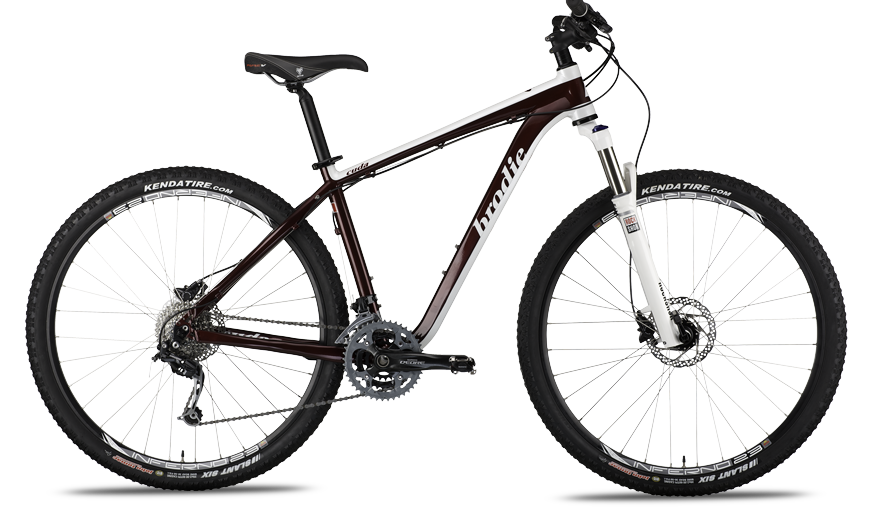
I took my bike to Performance Bicycle on Sorrento Valley Road (which was in pieces due to my road trip from Vancouver to San Diego). I own a Brodie Cuda 29er. Sweet front suspension mountain bike.

Karen bikeI walked in and said, “Hi. I need your help.”

Jason replies, “What can we do for you? We’re here to help.”

K: “My bike is in pieces. Can you reassemble it and air the tires so I can get it back in the trails?”

J: “We absolutely can do that for you.”

I could have reassembled it myself but it would have taken me far too long, in comparison to these pros that have all the gadgets and equipment and skill! And besides, they’d do a way better job than I would!

Asking for someone’s help is part of being human. It’s part of being in community. It’s part of belonging. It’s part of excellent camaraderie. It’s part of healthy relationships. From a professional point of view, it’s also good business.

Why have we stopped asking? What presuppositions have we distorted about the phrase, “I need your help.”

I have a request: I’d like you to ask for help once a day for the next fourteen days. Keep track of the responses. Let me know what happens: me[at]karenthrall.com I’d love to hear about it. If you’re the only one giving, it’s up to you to change that. How? You can start with, “I need your help.”

– Karen Thrall

 * also published on www.karenthrall.com

Categories
Ashley Career

Fear and Desire

As a twenty something, I feel very safe about my life decisions so far. I went to college in my home state, and I applied to grad school and ended up staying at Ball State University after undergrad because it was “free” (tuition reimbursement and a stipend ﹘ can’t beat it). My husband was the one who encouraged me to apply for jobs in February of our final year of grad school, in the heart of thesis projects. It paid off and I found a dream job in a city I longed to live in; it was a package I couldn’t refuse. But truth be told, despite working my butt off these past four years, it’s all been pretty comfortable.

When things get a little too comfortable and/or boring, it’s probably a sign that you’ve been playing it safe for some time. This week, I begin a new job within the organization I currently work for. This will truly be a career shift and is an opportunity to grow skill sets in areas of business I’ve been drawn to since I began my career. I’m incredibly excited about what this new opportunity means for me personally, but I’m most looking forward to the impact I can make within the organization.

But, truth is, although I’m ready to shake things up, I haven’t been so confident about the new role until recently. When I was first approached about the opportunity, I was feeling inadequate and questioned how I could possibly be the right fit for this type of role. (And then Catherine plopped a great article in front of me about how women don’t express their value and exude confidence about their skill set the way men do… go figure.) Once things moved forward, I became pretty terrified by what this change would mean. It wasn’t a new sensation; I’ve been afraid of change for as long as I can remember, though as I age, the degree of fear has lessened substantially. Then I was reading an article where a young female entrepreneur was sharing career advice about how you should be more excited about a new opportunity than you fear it. At that moment I thought, “bingo!” – that’s exactly how I feel.

I’m so excited about this change that any nerves and fears associated with what’s to come have subsided dramatically. I’ve replaced insecurity with desire and determination to succeed. If you’re ever fearful of a new endeavor, I hope you will also take inventory of your emotions and see if excitement is ready to overtake any fear or anxiety clouding your visions of success.

– Ashley Respecki

Categories
Career Karen

Confrontation: Deal with it now or deal with it later

One of my favorite seminars to facilitate deals with the topic of confrontation. We begin with a few general characteristics that typically surface and the participants choose which they prefer: deal with it now or deal with it later. Now the dialogue begins!

In small groups they tackle seven questions, one at a time. The first question is “What do you value most about how you deal with confrontation and conflict?” When they’ve answered the first question, they share the bullet points in the larger forum. They continue on to the second question, “What don’t you like about how the other group deals with confrontation and conflict?” We continue with this format, each question propelling us forward, until we’ve completed the exercise.

We end with a debrief and open conversations. The atmosphere is vibrant! The honesty and transparency is electric! Why? Because the safety to process how we function in unexpected turbulence is valuable.

Many times confrontation and conflict take us by surprise and our emotions are not prepared for this kind of disruption. We need these training opportunities to develop the skill of conflict resolve. I sure do!

Conflict surrounds us on a daily basis. We deal with unsettling moments every day: spilling coffee on your shirt; a traffic jam; a curt email; a rushed meeting; a crowded street; a crying child; the dog made a mess in your kitchen; tripping on a step – you get the idea! And these are the easy ones. The hard ones are when our emotions are heightened and we need to communicate. Sometimes we avoid communicating, hoping it will go away. By avoiding the confrontation, we are left battling disappointment, frustration and anger internally. That takes up a lot of energy.

Learn to communicate well in confrontation. Become an expert. The outcome? You’ll sleep better at night.

Okay, your turn! How do you deal with confrontation?

NOW:  “Let’s deal with this now.”

  • Let’s get it all out on the table and we’ll work through it.
  • If we say anything wrong, we’ll apologize.
  • Let’s not have anything between us.
  • We need to resolve this and not let time lapse.

LATER: “Let’s deal with this later.”

  • Let me think through how I’m feeling before I tell you.
  • I don’t want to say anything that I’ll regret later.
  • My mind is blank and I don’t know what to say.
  • I want to resolve, but I need to figure out what to resolve first.

Emotions play a big part in how well we can resolve conflict. Knowing what works for you to get the Best You to show up is vital to conflict resolution. If you need time to think and formulate your thoughts, take the time. If you need to get it out of your system so it doesn’t fester, get it out. The tricky part is “How?”

Are you in any type of conflict now? Is there a situation with a colleague or a loved one that has unsettled you? First, choose either the stance of Deal With It Now or Deal With It Later. Which one best describes you (normally)? Now, state your value.

“I need to talk about this right away so it doesn’t build up. I want to resolve this. Silence doesn’t work well for me. When are you free to chat?” The hard part for Now People is waiting for the right time to talk. They speak too soon, thus, their energy gets misinterpreted as aggression.

“I need time to think. My thoughts are blank. I want to resolve this, but I need to figure out what to say first. How much time can I have before we chat?” The hard part for Later People is they let too much time lapse and end up never speaking up. Their lack of energy gets misinterpreted as passive aggression.

If you are in leadership, you are trained to deal with matters quickly and efficiently.  But which group is the real you? Pick one, and then become extraordinarily dazzling at it. Become an expert conflict resolver as a Now or as a Later. Develop your skill. And watch conflict diffuse effortlessly.

– Karen Thrall

*also published on www.karenthrall.com

Categories
On the Job

Change: The Universal Language

Last week, Karen and I teamed up to present a session in Atlanta, Georgia. Our session was titled “Change the Game, Don’t Let the Game Change You,” in honor of the great Macklemore & Ryan Lewis. While I’ve been consulting and working with architects and their professional association for almost a year now, I don’t have a background in architecture, and neither does Karen. Sure, we can both appreciate good design, but you definitely don’t want us in charge of designing your building. And while we love to share our experience with change, the most powerful part of the session – and our favorite – is hearing from the attendees themselves.

Karen and I don’t design buildings, and our session attendees don’t teach on the subject of change, and you as the reader don’t have the same background, either. But we do have one thing in common, though: we’ve all experienced change. While the specifics of the changes we’ve had in our personal and professional lives can be vastly different, the emotions that come along with change are usually very familiar: anxiety, excitement, fear, apprehension, curiosity, happiness, relief. While I may not be able to relate to the exact situation of the change happening in your architecture firm, I can definitely relate to feeling nervous about what a change might mean, or being excited about the opportunities it might present for me. And in relating to those common feelings, we find the commonality in our experiences and can learn from each other. That was the coolest part of or session last week – helping the attendees find their common ground and connect with each other. Sure, it was easier since they were in the same industry and they were much more likely to have more similarities in the change they’re experiencing. But it’s powerful knowing you can connect with someone based on a shared experience in emotion. And the cliche about change is true – it’s the only thing that’s constant. We may just as well get comfortable with it and comfortable reaching out to those who can relate. It makes the journey a whole lot easier.

Categories
Book Reports Libby

Dead Wake

I was at my cousin’s wedding and my uncle was discussing the new Erik Larson book about the sinking of the Lusitania in 1915. As a fan of Larson (Devil in the White City, In the Garden of Beasts), I was excited to read his latest book, Dead Wake. I read it in just a few days – as per his style, the true tale gripped me from the get-go. Larson tells his stories from the perspective of those who lived them. By researching passenger biographies, ship manifests and captains’ logs, Larson paints a picture of all the people involved in this tragedy, from the youngest of the ship’s passengers to President Woodrow Wilson. Admittedly, I did not really know the story of the Lusitania – only that it was sunk by a German U-boat and that its sinking is what brought the U.S. into the First World War.

But the story is so much more than that – a story of technology, of communication (or lack thereof), of luck and of hope. Mostly, though, it is a story about decision-making: the many opportunities for things to have gone another way, if only a different decision had been made. What if those passengers had taken another ship on another day? What if the British intelligence agency had shared information more readily? What if the U-Boat captain had gone in a different direction? What if the ship had been using all its power instead of conserving? It’s a tragic story, but also fascinating when you consider how many decisions each of us makes on a daily basis – which of those, even the most mundane, have saved us from unbridled success and which from personal tragedy? It is enough to paralyze one into inaction, or propel one into reckless behavior. How you weigh information and what you do with it is the most important part of writing your own story. What’s your next chapter?

– Libby Bingham

Categories
Inside My Head Karen

The Water Bottle

Karen WaterI went to Cebu, Philippines in my early thirties. I was invited to visit a midwifery program where my friend, Carolina, worked. It was stationed in the most impoverished part of the city. Families (mother, father, children) lived in homes the size of a large dining room table or a guestroom bathroom; made of cardboard and built on pallets.

The water was filthy and the streets had streams trickling through gutters for disposing various polutions. Children were barely clothed and rarely bathed.

The medical shelter had a breakfast and lunch program for children who were severely malnourished.

One day, I placed my water bottle on a shelf while helping with the meal program. Louis, a tiny 5 year old who was deaf and mute, would push and slap as a way of communicating. He began to push and slap me, making loud groans and squeals.

“Louis. Louis. What is it?”

He pointed to my water bottle. He wanted me to give it to him. The children were given beverages, food, snacks and water.

“Oh Louis. No, no. That’s my water bottle. There is your drink.”

He reacted strongly, continuing to make loud shrieks, pointing, jumping and flailing his arms. I tried to calm him down. He was determined to have my water bottle.

I paused. I looked at him. I looked around me.

All these malnourished children. Impoverished. They had nothing. They lived in cardboard homes. They didn’t bathe. They had physical ailments, low immune systems and are fighting for their lives.

AND I WON’T GIVE LOUIS MY WATER BOTTLE?!!

“Louis….”

I grabbed my water bottle. I bent down so our eyes could talk to each other. He can’t hear me. He can’t speak.

“Louis – you can have my water bottle. Yes, please, you can have my water bottle. I’m so sorry, Louis. Forgive me, I was thoughtless. Here you go. It’s yours. I’m very happy to give it to you.”

Louis took my water bottle and ran around the room, showing all the kids. He was so proud that he was the only child with a water bottle.

This memory is a regret of mine. Although it ended on a positive note, I don’t like how small-minded I was. I don’t like me in this story. I don’t like that I said, “no, that’s my water bottle” – to a child who has nothing and I have all the lifestyle comforts at my disposal. I hate that I said “no.” Can’t take it back. Wish I could.

May I always choose generosity over my own personal comforts.

– Karen Thrall

Categories
On the Job

On the Road: Is It Worth It?

When technology rules and there are seemingly endless ways to keep in touch (or distract ourselves!), is meeting face to face less important? As I write this, my bags are packed, and I’m en route to Atlanta, where nearly 20,000 professionals from the architectural, engineering and construction industries will come together for the next three to four days. There will be hundreds of education sessions, evening events and opportunities to informally connect while we take over the city of Coke, CNN and inspiring leadership lessons from Martin Luther King, Jr. and President Jimmy Carter.

But do we really need to be physically together in the same space? We’ve got email, conference calls, video chat, Facebook, Instagram, and Twitter, to keep us connected in our homes and offices. We’ve also got commitments like jobs, families, friends, and budgets that make travel more challenging and increase the appeal of those electronic connections even more. And while all of that is true, and it is easier to keep in touch than ever, I absolutely think there’s still value in being face to face, and in the case of a large convention like this, being part of something bigger than yourself.

We so easily get bogged down in the day to day and promise to catch up with friends and colleagues later. But later keeps getting pushed further and further away as the urgent drowns out the important. Sure, the education and keynote sessions at a conference like this are great (I sure hope so, since Karen and I are leading one!), but the real magic happens between the attendees. Sure, that can be during a session, but it’s also in the hallway, during lunch, over a cocktail or two or even bumping into someone from the same conference out and about enjoying the host city. There’s something incredibly powerful in getting out from behind your desk and daily routine, and taking a moment to connect with someone else who does what you do and giving yourself permission to focus on your own growth for a minute or two.

When is the last time you unplugged and met a friend, family member or colleague for some face time and did yourself a favor in the meantime?